

GST InvoiceNow Requirement in Singapore (2025–2031): What Businesses Need to Know

What is the GST InvoiceNow Requirement?

The Inland Revenue Authority of Singapore (IRAS) is introducing the GST InvoiceNow Requirement as part of Singapore’s initiative to digitalise tax administration and improve compliance.

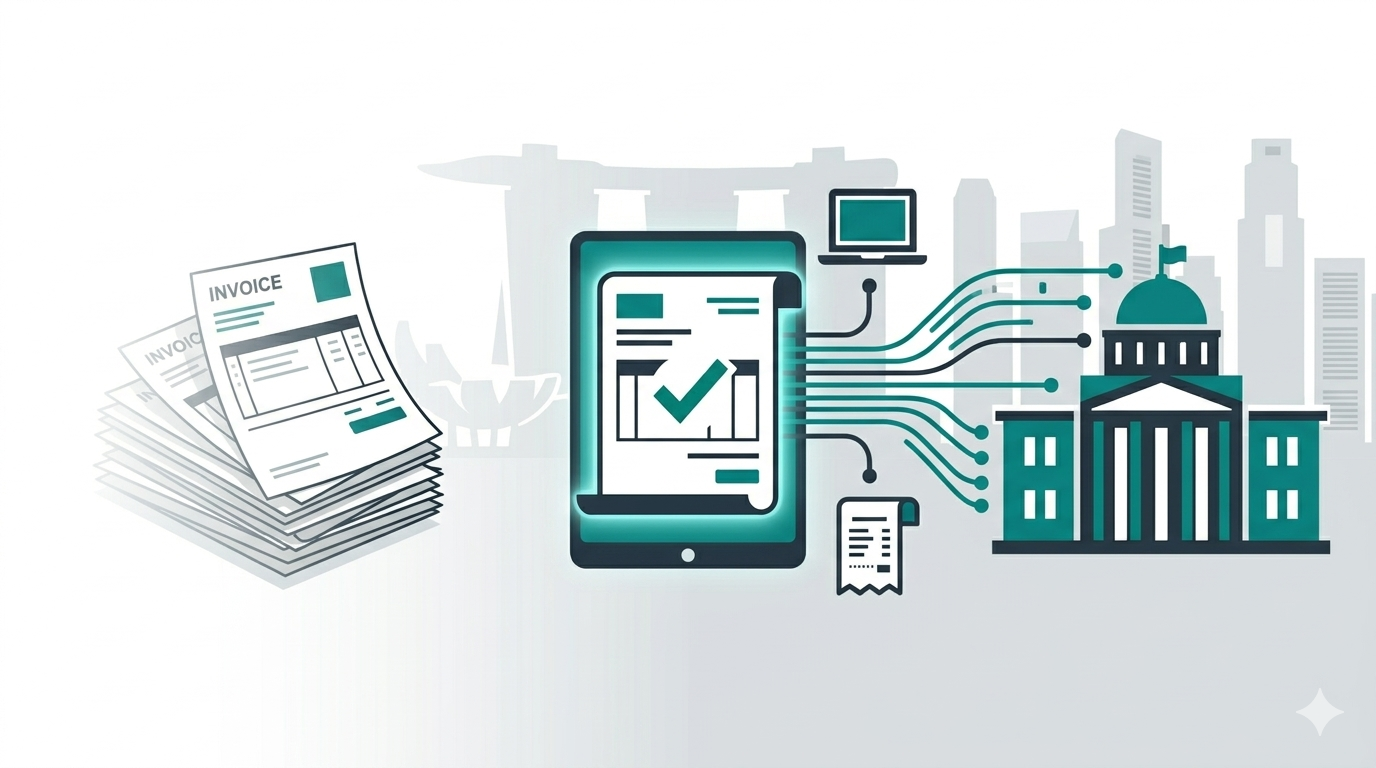
InvoiceNow is Singapore’s nationwide e‑invoicing network based on the Peppol standard, launched by the Infocomm Media Development Authority (IMDA) in 2019. It enables businesses to send and receive invoices electronically in a structured digital format through compatible accounting or finance systems.

Under this initiative, GST‑registered businesses will be required to transmit invoice data to IRAS via InvoiceNow‑Ready solutions. This allows IRAS to receive invoice information automatically, improving transparency, reducing manual reporting errors, and streamlining GST compliance.

The requirement will be implemented progressively from 2025 to 2031.

GST InvoiceNow Implementation Timeline

1 November 2025 – Companies that voluntarily register for GST within 6 months of incorporation.
1 April 2026 – All new voluntary GST registrants.
1 April 2028 – New compulsory GST registrants and existing GST businesses with annual supplies ≤ S$200,000.
1 April 2029 – Existing GST businesses with annual supplies ≤ S$1,000,000.
1 April 2030 – Existing GST businesses with annual supplies ≤ S$4,000,000.
1 April 2031 – Existing GST businesses with annual supplies > S$4,000,000.


Total annual supplies include the value of standard‑rated, zero‑rated, and exempt supplies made in accounting periods ending in calendar year 2025.

IRAS will inform existing GST‑registered businesses of their mandatory implementation date by mid‑2026.

Businesses Exempted from the GST InvoiceNow Requirement

The following businesses are excluded from the mandatory InvoiceNow requirement:

  • Overseas entities, including vendors registered under the Overseas Vendor Registration (OVR) regime
  • Businesses required to register for GST solely due to the Reverse Charge regime

These businesses are not required to transmit invoice data to IRAS through InvoiceNow.

How InvoiceNow Works for GST Reporting

To comply with the new requirement, businesses must use InvoiceNow‑Ready accounting or finance solutions.

Once activated:

  1. Businesses send invoices through the InvoiceNow network.
  2. The invoice data is transmitted via IMDA‑accredited Access Point Providers.
  3. A copy of the invoice data is automatically submitted to IRAS.

This automated process helps businesses reduce manual GST reporting and minimise compliance errors.

Benefits of InvoiceNow for Businesses

  • Faster invoicing – Invoices can be sent and received instantly through integrated accounting systems.
  • Reduced administrative work – Automated invoice transmission reduces manual data entry and paperwork.
  • Improved GST compliance – InvoiceNow‑Ready solutions may include validation checks to detect wrongful GST charges.
  • Better digital integration – Businesses can integrate accounting, ERP, and finance systems with Singapore’s national e‑invoicing infrastructure.

Preparing Your Business for InvoiceNow

Businesses are encouraged to adopt InvoiceNow early, even before their mandatory implementation date.

To get started:

  • Ensure your accounting software supports InvoiceNow‑Ready solutions
  • Work with an IMDA‑accredited Access Point Provider
  • Activate the feature to transmit invoice data to IRAS

Early adoption helps businesses avoid last‑minute compliance issues and ensures smooth GST reporting.

Conclusion

The GST InvoiceNow Requirement represents a major step in Singapore’s move towards fully digital tax administration. With mandatory adoption beginning in 2025 and expanding to all GST‑registered businesses by 2031, companies should start preparing their systems and processes early.

Adopting InvoiceNow not only ensures compliance with IRAS requirements but also improves operational efficiency and financial reporting accuracy.

Related Posts